Home / Technology
Technology

Cooled by Nexalus.
From chip to rack.

Cooled by Nexalus

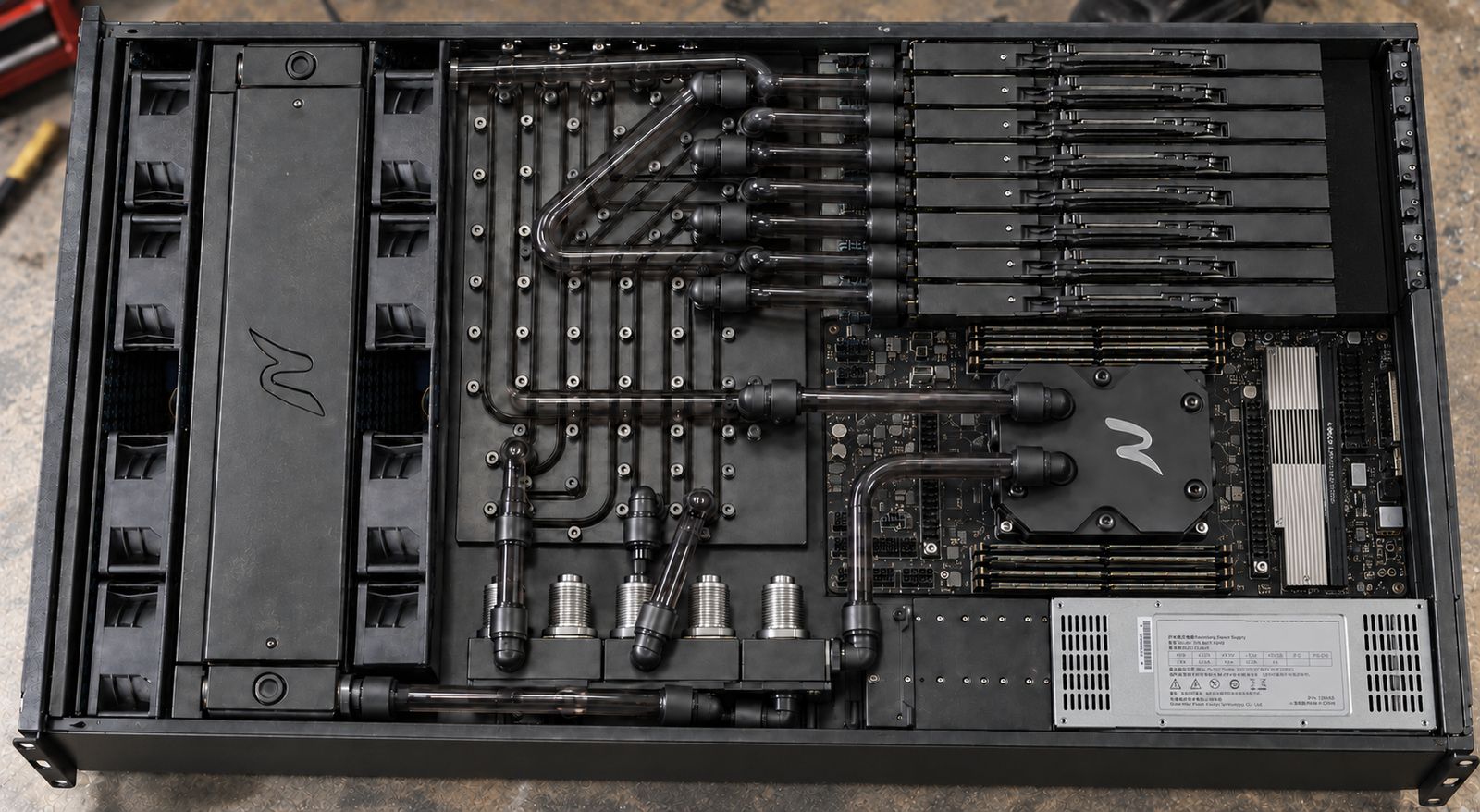
Nexalus has spent years cooling dense multi-GPU systems that run flat out around the clock. Every Nova server carries that complete thermal system, not an add-on cold plate.

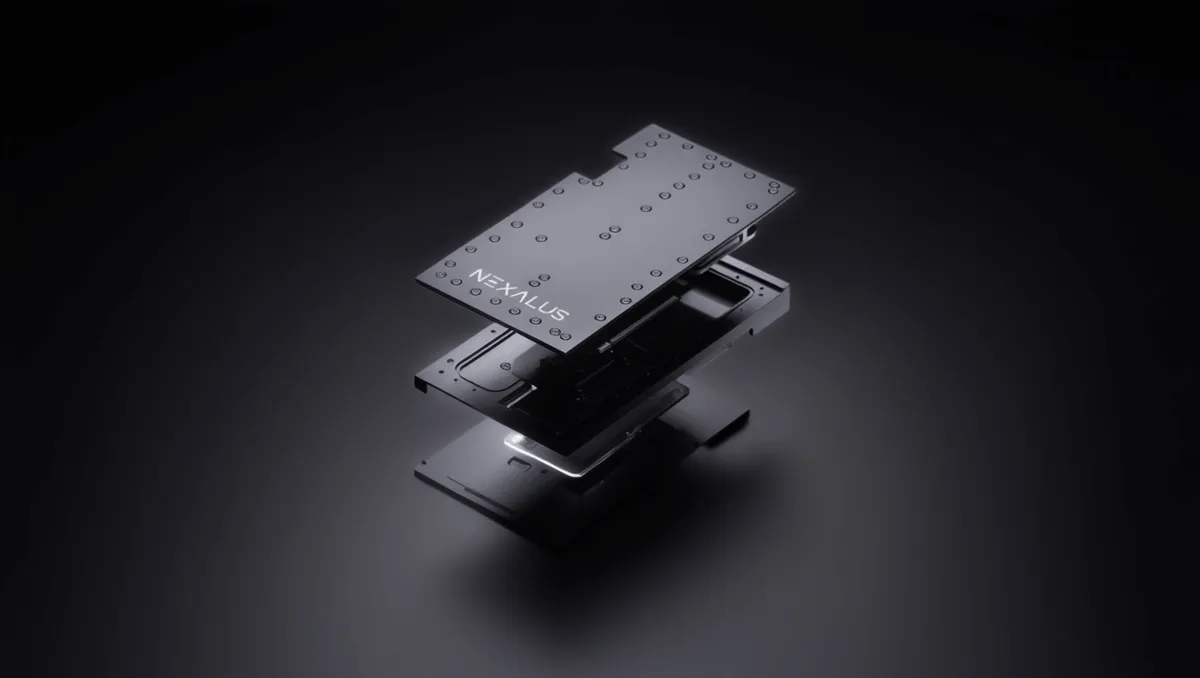
Nexalus jet-impingement cold plate
The building blocks

Six parts. One engineered loop.

Cooled by Nexalus

Each part adds a few percent. Stacked together, the loop outperforms every alternative we've tested.

Jet-impingement cold plates

Coolant is fired straight at the hottest spots on each GPU and the CPU, cutting resistance at the first and most important boundary.

High-performance thermal interface

A low-resistance thermal interface between silicon and cold plate, so less heat is left behind at the chip.

Redundant micropumps

10 aerospace-grade micropumps in 5 loops. Many small pumps beat a few large ones on efficiency and redundancy.

Balanced flow

Equal-length runs send every GPU the same flow. No weak slot, no hot card holding the server back.

Performance radiator, 16 fans

The densest radiator the 4U frontal area allows, with many small fans that can lose one without losing the server.

Low pressure, leak-proof by design

Jet impingement needs very little pressure, so the loop runs gently. Medical-grade tubing, rated well above operating pressure.

Inside Nova 8: the Nexalus loop
Density

Two slots become one.

Cooled by Nexalus

Air-cooled GPUs need two slots each for their heatsinks and fans. A Nexalus liquid block needs one. That's how eight full-power, 600 W GPUs fit in one 4U server with one CPU and one board.

  • 8 GPUs in the slot space air cooling needs for 4
  • One CPU, one board, one chassis to buy, power and support
  • No de-rated "Max-Q" cards: every GPU runs at its full 600 W
Performance

Cooler silicon boosts itself.

Cooled by Nexalus

Modern NVIDIA GPUs raise their clocks when they have thermal headroom and pull them back when they run hot. Keep every card cool and they hold their boost hour after hour. That's where the extra tokens come from.

  • +20% tokens from the same eight GPUs2
  • One hour at full load, no card above 80 °C1
  • Even out of the box, before any tuning: +14%

See the benchmarks

Tokens per second, 8-GPU server
Nova 8 Inference, tuned54,968
Nova 8 Inference, out of the box51,705
Tier-1 air-cooled reference45,527

Same GPU model and LLM. Test harnesses differ; see benchmark notes.2

Heat, not waste

Crawl. Walk. Run.

Cooled by Nexalus

One server design, three deployment steps. No redesign between them.

01 · Drop in

Standard rack today

Nova slides into an existing air-cooled 19-inch rack. No facility change.

02 · Plug in

Export the heat

Two rear quick-connects send the heat out as water at up to 60 °C.

03 · Seal the rack

Lose the room HVAC

Heat is captured at source, so the data hall no longer needs air conditioning for the servers.

Today · air-cooled hall

Serverheat into air
→
CRAC/CRAHair handling
→
Chillercompressors
→
Towerevaporates water

Heat is mixed into room air, chilled back out, then evaporated away: three stages of plant after the server.

Sealed rack · cooled by Nexalus

Nova rackheat captured at source
60 °C
→
Dry coolerfans only
or
Heat reusebuildings, district heat

60 °C water is hotter than outside air on the hottest day, so a dry cooler rejects it all year. No compressors, no chilled water.

~100%
of server heat into water

Up to 98% independently measured on a Nexalus sealed platform.5

0
CRACs, CRAHs or chillers

In a sealed rack the room no longer needs air conditioning for the servers.

0 L
water evaporated

Closed loop with dry coolers. Nothing lost to cooling towers.

Reliability

Built to keep serving.

Cooled by Nexalus

No single point of failure

10 pumps in 5 loops, 16 fans and 2+2 redundant power supplies. One part fails and the server keeps running.

Steady temperatures

Liquid holds the chips at a steady temperature, which cuts the thermal cycling that wears solder joints and capacitors.

Serviceable

Quick-disconnect fittings let you swap parts without draining the loop.

Don't take our numbers

Run your model on a live Nova 8.

Book a two-hour remote session in a fresh, isolated environment. See your own tokens per second before you commit.